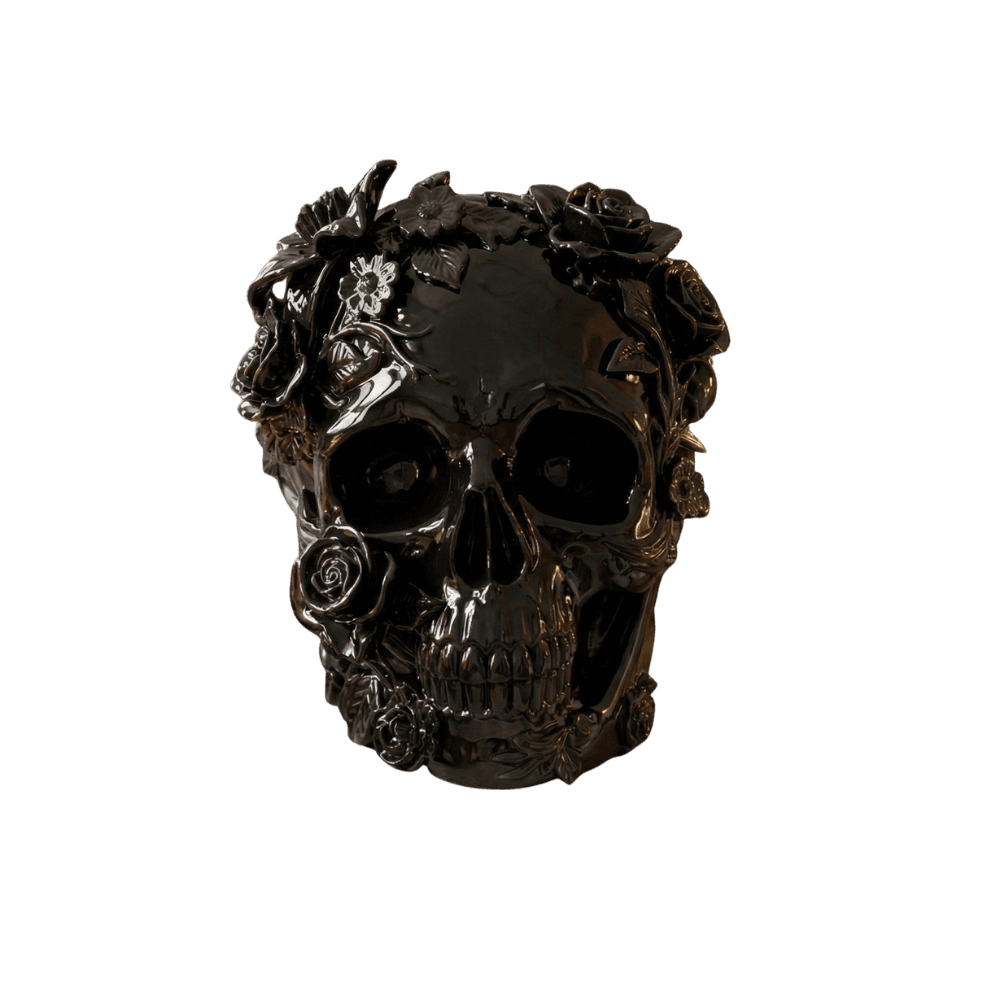
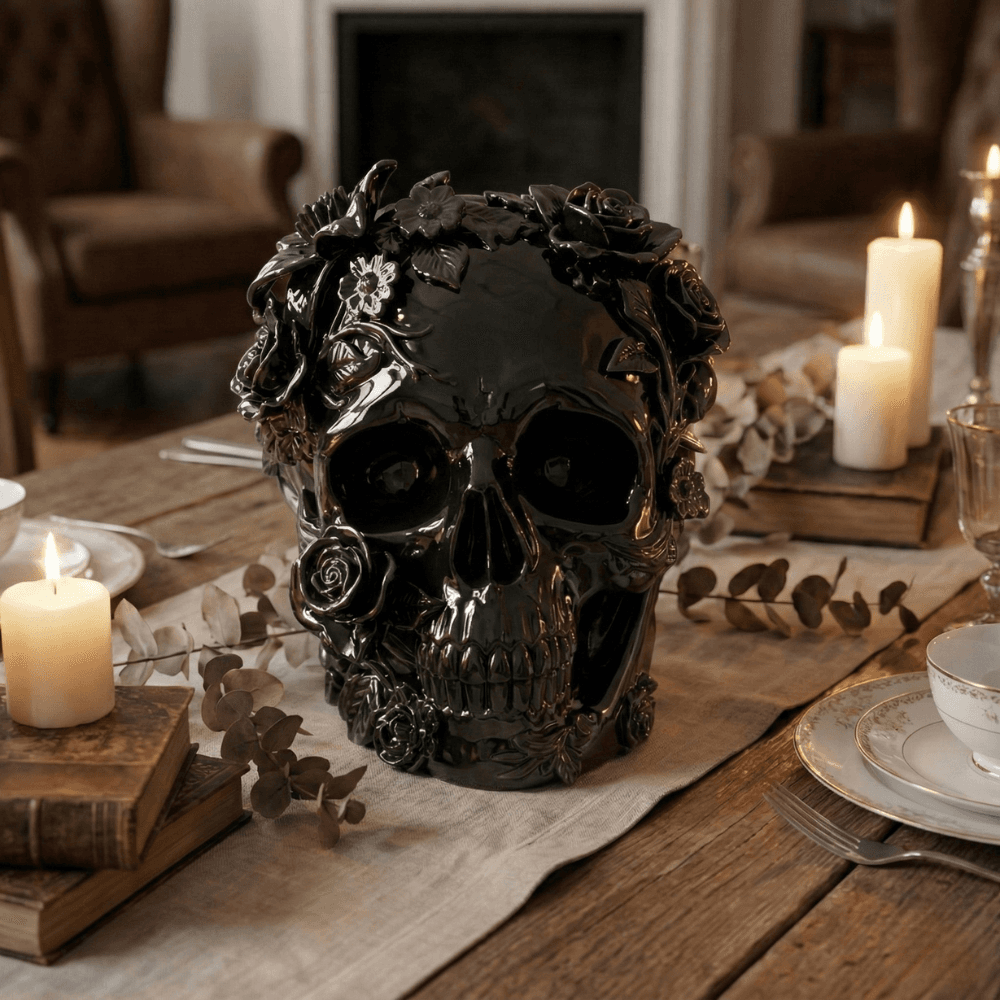
Tête de Mort Florale "Memento"
34.99 €TVA non applicable (art. 293B CGI)
✓ En stock
Caractéristiques
- Dimensions
- 15 x 14,7 x 15,5 cm
- Poids
- 300 g
- Matériau
- PLA biosourcé
- Couleur
- Noir
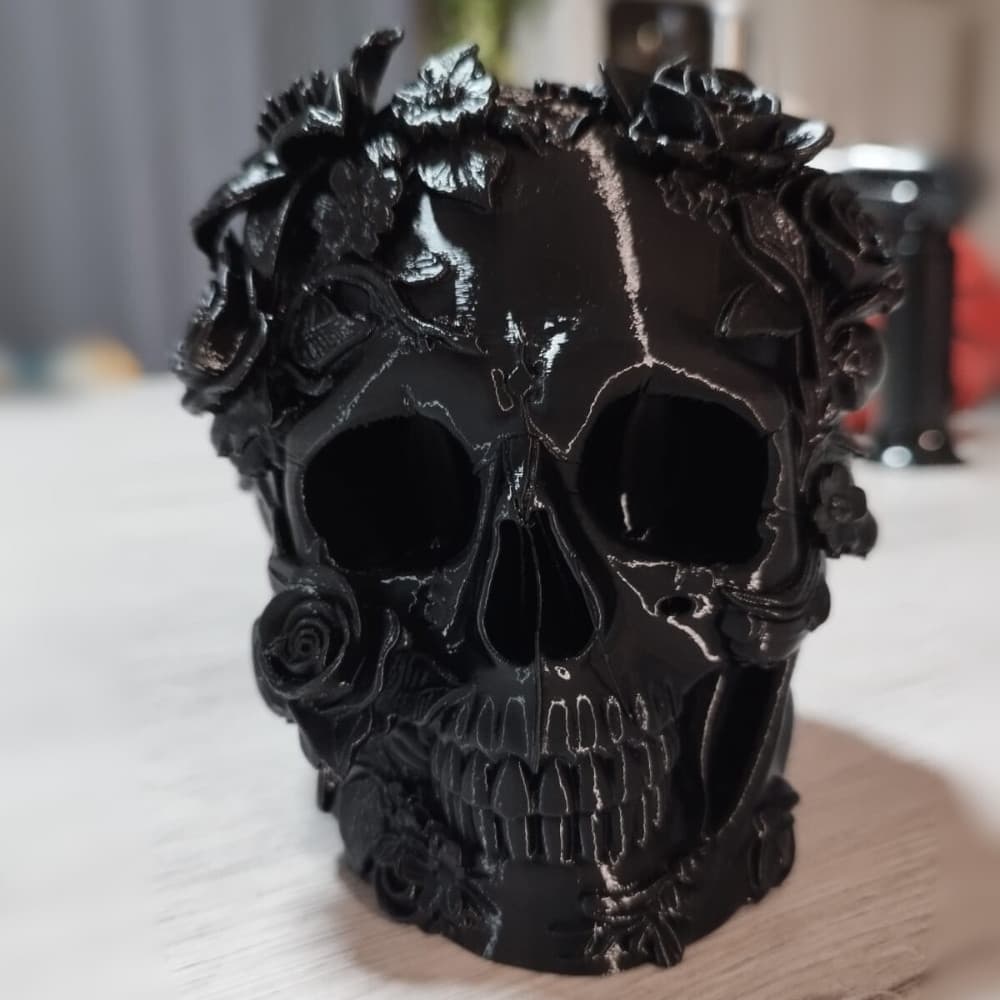
Memento — souviens-toi que tu vas mourir. Cette tête de mort florale revisite le thème classique de la vanité avec un regard contemporain. Un crâne humain en PLA noir, recouvert de motifs floraux en relief qui semblent pousser sur l'os.
Posée sur une étagère ou une table basse, cette pièce de 15 cm de haut captive par son contraste : la dureté du crâne, la douceur des fleurs, le noir profond, la précision des détails.
Pourquoi elle est unique
- Motifs floraux intégrés dans la structure, pas collés ni peints
- Noir mat profond, présence visuelle forte même à distance
- Pièce massive (300 g) qui ne bouge pas, stable sur toute surface
- Imprimée en une seule pièce — aucun assemblage
Une œuvre qui ne laisse personne indifférent. Pour les amateurs d'art, de symbolisme et de décoration forte.
Fabriqué en FrancePlastique biosourcéLivraison Mondial Relay