Carl Boyd graduated from UIC’s Industrial Design program and has worked professionally in exhibit and product design. He interned at Prairie Fish, one of the nation’s first retail design firms committed to green design. As an initial member of the Foresight Design Initiative, he launched Chicago Green Drinks, organized Chicago’s first Eco-Transportation Show, and designed exhibits for the Chicago Department of Environment.
He’s served as a judge of green design for the 2008 International Housewares Show, and Chicago’s Greenworks Awards.
Carl Boyd co-pilots an ongoing project called Normal - started in 2003 - designing modern, practical products that are locally-made using sustainably-preferable materials and processes. Normal products are sold across North America, have been featured in Wallpaper, TIME, New City, Chicago Tribune, Time Out and in several TV spots. They have been selected for Museum exhibits nationwide and abroad.
Carl currently teaches product design, focusing on sustainability issues, at Columbia College, as well as at the Art Institute this coming Spring.
Ted is always looking for ways to minimize his ecological footprint. Professionally, Ted is working to gain the skills necessary to turn his passion for sustainable development into action, as an entrepreneur or financing sustainable businesses.
Ted studied economics and international business at Saint Louis University’s campus in Madrid, where he graduated Magna Cum Laude and was honored as the Distinguished Student in International Business for his class. As the founder and president of the SLU Madrid Business Club, Ted focused the club’s activities on sustainability.
While working for commercial real estate multi-national Jones Lang LaSalle’s Madrid office, Ted strove to implement sustainable practices both within the firm and for its clients. He proposed and designed an Environmental Sustainability Action Plan for JLL Spain. Green Building and Environmentally Sustainable Development remain a passion for Ted: he believes that the intersection of sustainable infrastructure and sustainable attitude is where we’ll find a sustainable society.
Ted currently works for a private equity firm in Madrid, learning skills that he hopes to apply to finance Environmentally Sustainable Development in the United States and around the world.
Cherl Petso is the Associate Editor at Disaboom.com, an online magazine for people with disabilities. Her writing expertise includes articles about the environment and sustainable living, and vegan/vegetarian issues. A vegetarian for 16 years and a recent vegan, Cherl is passionate about animal rights and issues. She enjoys writing about simple ways to lessen the impact on the Earth.
Cherl recently moved to Denver, Colorado from Bellingham, Washington. She enjoys hiking and hanging out with her puppy.
A freelance writer specializing in environmental and health topics, Linda recently was part of a core team of writers who developed content for GreenYour, a website devoted to greener living.
She wrote an environmental column for five years for Good Housekeeping magazine called Green Watch. You can find her articles in Plenty Magazine’s online newsletter, Fit Pregnancy, Good Housekeeping, Arthritis Today, Profiles (Continental Airline’s in-flight magazine), and Microsoft’s Encarta.
She served on her town’s environmental commission for 15 years and remains an active volunteer. Her personal essay column for the local newspaper offers her take on the natural world and on environmental topics in her neck of the woods.
Dayanti Karunaratne is a freelance journalist based in Canada's capital city, Ottawa.
Since graduating from Carleton University's journalism program in 2006, Karunaratne has worked on the news desk at the Port Hope Evening Guide, the Ottawa Citizen, and the Molokai Times. Karunaratne's writing appears in the Ottawa Citizen, Ottawa Magazine, the Globe and Mail, and other lifestyle publications.
Christie Nash is currently a Projects Coordinator at the Trent Centre for Community-Based Education whose mandate is to bring local organizations and academic resources together to create community- inspired research projects. She has recently completed her M.Ed in Education and Community Development and Comparative International Development Education at OISE/UT. Her professional experience has taken her around the world, including Thailand, India, Nunavut, and other parts of Canada.
She currently resides in Omemee, Ontario (where Neil Young spent his formative years!) in an 1861 log cabin with her boyfriend, Mark, and cat, Fergus.
Marie Oser is a best-selling author, columnist, and host/producer of VEG TV. A vegan lifestyle expert, and environmental advocate with a focus on nutrition and its role in disease prevention, Oser specializes in creating original gourmet recipes with a solid nutritional bottom line.
Many prominent medical and nutrition professionals endorse her work, including Dr. Colin Campbell, Professor Emeritus, Cornell University and principal researcher of the groundbreaking CHINA STUDY, and Neal Barnard, M.D. founder and president of Physicians Committee for Responsible Medicine in Washington, DC.
Marie is president of VEGTV, Inc., a video production company producing content for TV and new media. VEGTV streams hundreds of lifestyle videos to more than 1,000 sites globally. In her role as Director of Product Development at Smart Planet Kitchen, she has created, Marie Oser’s Lean & Green, a new line of vegan and Fair Trade Certified products. Marie has appeared on CNN, ABC, National Public Radio, QVC, WUSA, WNBC, KCAL, KOVR, Home & Garden Television (HGTV), FINE LIVING, TECH TV, and Discovery Channel.
Vegetarian since 1971; vegan since 1990, Marie left a career in TV advertising to pursue her interest in food, health, and nutrition. Born and raised in Philadelphia, PA, she studied psychology at St. Joseph’s University. Marie is a gourmet cook and organic gardener living in California, writing her 5th book and hiking every day with Travis, her Yellow Lab companion.
Fisker Automotive will begin deploying its government loan designated to spur U.S. production of fuel-efficient vehicles by buying and restoring an out-of-use GM plant in Delaware. Fisker paid only $18 million for the idle plant, but plans to spend an additional $175 million on refurbishing it. This Wilmington plant will be the manufacturing site for the company’s second model, a plug-in hybrid (PHEV) sedan.
The factory–originally built by GM in 1947–will reach full production capacity of 75,000-100,000 vehicles a year by 2014. By that point Fisker estimates that reopening the plant will create 2,000 factory jobs. The automaker expects production from this plant will create an additional 3,000 vendor and supplier jobs. …read more of Fisker Starts Putting Government Loan to Use here
The energy department has begun to dole out $25 billion in loans designated for the development of fuel-efficient vehicles. The program is designed to grease the wheels for technological innovation that will drive the auto industry of tomorrow to occur here in the United States.
After decades of job cuts in the US auto industry, the federal government is hoping that innovation can revitalize the sector and create employment.
The first $8 billion was handed out back in July, with Fisker being announced as a loan recipient just this week. GM and Chrysler have been excluded from this program to date, since they do not meet the economic viability standard for loan recipients. …read more of Energy Department Money Going To Big And Small Carmakers here
There is an inescapable link between building and personal transportation: what we build where determines where we drive when. All the greenhouse gases (GHGs) and smog emitted by cars come about because someone is trying to get somewhere, usually a building. When green building is mentioned the design, materials, and functionality of a building typically come to mind.
However, there is a larger town planning aspect which also must be considered. Sustainable town planning includes placing buildings in such a way that self-powered and public transportation are encouraged.
If you have to get on the highway to get to anything zoned for nonresidential use, it’s very hard to live a sustainable lifestyle. Sustainable town planning doesn’t just help the environment, it leads to more livable communities and a higher quality of life. …read more of The Relationship Between Green Building and Green Cars here
The “Cash-for-Clunkers” program–officially the Car Allowance Rebate System (CARS)–was not designed by the US Department of Transportation (DOT) only as an environmental program.
Some environmental impact was certain given the requirement that newly purchased vehicles be more fuel efficient than trade-ins, but the program is primarily a way to boost auto sales. CARS has met or surpassed expectations on both accounts.
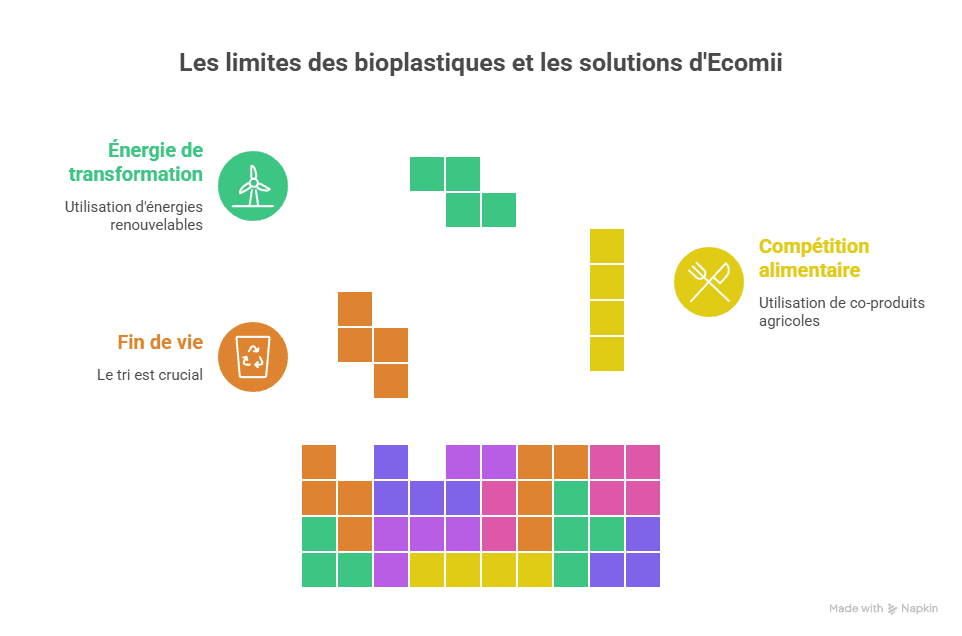
Bioplastics, an emerging technology that uses plant resins to make biodegradable and compostable plastic from renewable resources, is a field that is constantly evolving with new materials and technology.
This technology actually creates plastic resins by fermenting the starches and sugars in corn, sugarcane and other plants into lactic acid. The lactic acid is converted into a plastic substance, which is heated and shaped before being used in product manufacture.
The production of bioplastics results in the emission of far less carbon dioxide than traditional plastics, and is being used for everything from gift cards, deli containers and picnic ware to mobile phone cases and auto parts. Auto parts?
In 2003, Toyota Motor Corporation became the first automaker in the world to use bioplastics in the manufacture of auto parts, employing them in covers for the spare tire and for plastic trays inside the passenger compartment. These days Toyota is in development with an ultra light, super efficient plug-in hybrid with a bioplastic body made of seaweed that could be in the showroom in the 10 to 15 years. …read more of Toyota Kelp Car: Wave of the Future here
Discover the latest developments in improving technologies, tightening auto standards, fuel alternatives and how to make your current car eco-friendly. Find out which companies are investing in energy efficient vehicles.